The booking wall verified
These sell out or block foreigners if you arrive unprepared — the dates, the official link, and whether your passport works.
Hunan Museum (Mawangdui) (湖南博物院)
✓ 2026-06-11- Release
- Free, but the daily quota is the catch - slots open in advance and go fast; book the moment your dates are set
- Price
- Free (still needs booking)
- Foreigners
- Passport works
- Resellers
- None official
Admission is free but capped (around 4,000/day) and reservation-only. There's an English path on the official site; book with your passport and bring it to enter. No same-day walk-up in season.
The reason to come is the Mawangdui tomb - the 2,000-year-old preserved body of Lady Dai and her silk and lacquer. Closed Mondays. The 'free' part is real; the hard part is the quota, so booking ahead is the whole game.
Source: official ticketing
Orange Isle (Juzizhou) (橘子洲)
✓ 2026-06-11- Release
- Next-day slots refresh at 00:00; reserve up to 3 days ahead
- Price
- Free (still needs booking)
- Foreigners
- Passport works
Entry is free but it's not actually walk-right-in: the island is capacity-capped and needs a free real-name reservation. The only official channel is the '岳麓山·橘子洲旅游区' WeChat account/mini-program, which is Chinese-first and built around a mainland ID, so the app can balk at a passport. In practice foreigners report just turning up and getting in by scanning the passport at the gate when the booking won't go through. Carry your passport regardless.
A long river island in the middle of the Xiang, free to enter, anchored by the giant young-Mao Zedong stone head at the south end. Walk it or pay a few yuan for the optional sightseeing trolley. Slots reopen daily at midnight for dates up to three days out, and the island runs a published crowd cap (~80,000), so weekends and the evening fireworks can hit the limit - book ahead or go early. There's no official booking website; it's the WeChat mini-program only.
Source: official ticketing
Yuelu Academy & Yuelu Mountain (岳麓书院)
✓ 2026-06-11- Price
- ¥40
- Foreigners
- Passport works
Buy the academy ticket at the gate (passport ID). The surrounding Yuelu Mountain park is free; the academy itself is the paid historic core.
One of China's great thousand-year Confucian academies, still part of Hunan University, entry around ¥40. The mountain around it - including the red-leaf pavilion - is a free public park, so you can climb for nothing and just pay for the academy if you want inside.
Source: official ticketing
Landing & registration
The first-24-hours facts: hotels, police registration, and whether your card works.
- Hotels take foreigners
- Mixed — check first
- Foreign card via Alipay/WeChat
- Works
- Police registration
- Changsha is a big provincial capital with plenty of foreigner-registered hotels, but it sees fewer Western tourists than the coast, so the cheaper local chains and guesthouses can be hit or miss. Confirm the property takes foreign passports when you book, especially below the mid-range.
Eat like a local
What to order, where locals actually queue, and the food-street traps to skip.

Changsha's black-fried stinky tofu, crisp outside and soft within, doused in chili, garlic and a savory sauce.
The black version is the local one; the smell is stronger than the taste, try a small plate first.
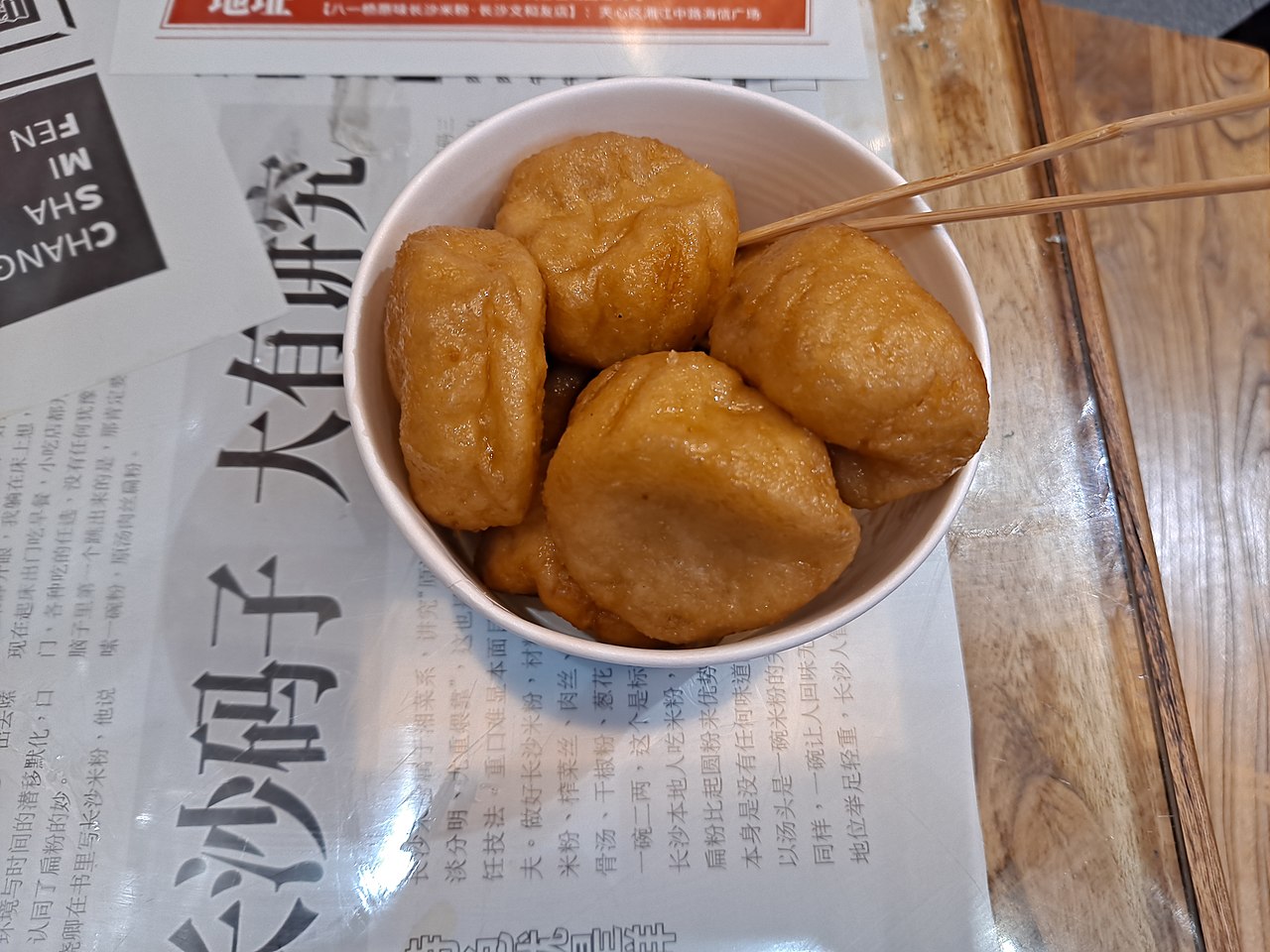
Glutinous rice balls fried in sugar and oil until sticky and caramelized, a cheap Changsha street sweet.
Eat them warm and fresh; they turn hard once they cool.
Crayfish stir-fried with chili, garlic and perilla, the city's late-night eat-with-your-hands dish.
A summer night-market thing, sold by weight; messy by design, so take the gloves.
Changsha's stinky tofu is deep-fried black, crisp outside and soft in, served in a pool of chili-garlic sauce - a different beast from the pale versions elsewhere. It's a ¥10-ish street snack; buy it from a busy stall with turnover, not the one with the longest curated photo queue. Smells worse than it tastes, in a good way.
Summer in Changsha is spicy crayfish season - whole tubs of them in garlic, chili or a numbing 13-spice sauce, eaten by hand with gloves and a beer. It's messy, communal and the real local night-out. Priced by weight, so check the per-jin rate. Wenheyou made it famous; the backstreet places do it cheaper.
Breakfast is a bowl of Changsha rice noodles (mifen) with a fried-mince or pork topping, a few yuan, done by mid-morning like everywhere in the south. And try Mao's red-braised pork (hong shao rou) - the local sweet-savory version Mao Zedong supposedly loved, fatty and dark, a Hunan staple worth ordering once.
The honest layer
The part a tourism board will never print.
Everyone tells you the Hunan Museum is a must, and it is - Mawangdui alone is worth the trip. What they leave out is that free doesn't mean easy: the daily quota caps it and the online slots release in advance and vanish. If you turn up without a reservation in peak season you don't get in. Book the day your trip firms up, on the official site, with your passport.
Changsha is the home of the milk-tea-and-snack queue economy - the bubble-tea chain with the two-hour line, the giant retro food hall, the stinky-tofu stall with the photo wall. Some of it is genuinely good; a lot of the queue is manufactured scarcity and check-in culture. The tea is fine. It is not worth ninety minutes. The same stinky tofu is on every other corner with no line.
Wenheyou is the multi-storey faux-1980s-Changsha food maze you've seen on social media. It's a fun walk-through and a great photo, but it's a curated mall, not the real old city, and the queues for its headline crayfish are long. Go for the spectacle, then eat the actual crayfish and stinky tofu in the surrounding streets where locals do, for less and without the wait.
This isn't tourist-spice. Xiang cuisine uses fresh and pickled chili by the fistful and chili oil as a base, not a garnish, and 'a little spicy' here will still hurt. If you don't eat heat, say bu la (no chili) clearly and still expect some. It's worth pushing your tolerance for, but go in warned.
Straight answers
How do I get into the Hunan Museum?
Reserve a free timed ticket in advance on the official site (there's an English path) with your passport, and bring that passport to enter. It's free but quota-capped at a few thousand a day, and slots sell out in peak season, so book as soon as your dates are set. It's closed Mondays. There's no authorized reseller - book direct.
Are the famous food queues actually worth it?
Some are, most aren't. The headline milk-tea and snack brands manufacture a lot of their line through scarcity and social-media check-in culture; the product is fine but rarely worth an hour-plus wait. The same stinky tofu, crayfish and tea are all over the city with no queue. Treat Wenheyou as a fun photo stop and eat the real thing in the streets around it.
Can I use a foreign card in Changsha?
Yes, through mobile pay. Foreign Visa/Mastercard link to Alipay and WeChat Pay and work for nearly everything - museums, food halls, metro, taxis. Set them up before you arrive. Carry a little cash for small street stalls that prefer it.
How spicy is the food really?
Very. Hunan cuisine is among the hottest in China and uses chili as a base ingredient, not a topping - 'mild' dishes still carry heat. If you can't take it, say bu la (no chili) when ordering and still brace yourself. It's a real part of the experience, but don't assume it'll be toned down for you.