The booking wall verified
These sell out or block foreigners if you arrive unprepared — the dates, the official link, and whether your passport works.
Sun Yat-sen Mausoleum (中山陵·钟山风景区)
✓ 2026-08-08- Price
- Free (still needs booking)
- Foreigners
- Passport works
Reserve real-name with your passport through the official 'Nanjing Zhongshan Scenic Spot' WeChat account/mini-program; free but capped. Online booking often fails for foreigners, so the widely reported workaround is to bring your passport and get in at the gate. No valid ID, no entry.
The climb is 392 steps in the open; go early in summer. The surrounding Purple Mountain park absorbs the rest of the day easily.
Source: official ticketing
Nanjing Massacre Memorial Hall
✓ 2026-08-08- Release
- Tickets released daily at 08:00; book 1-7 days ahead; closed Mondays
- Price
- Free (still needs booking)
- Foreigners
- Passport works
- Resellers
- None official
Free, mandatory real-name reservation via the official WeChat public account. Accepted documents explicitly include a passport and the Foreigner's Permanent Residence ID card. The three exhibition halls are booked separately. No third party is authorized to reserve.
Plan a quiet half day, not a quick stop. Photography is restricted in parts and the tone inside is solemn. Open 08:30-17:30, last entry 16:30.
Source: official ticketing
Presidential Palace (China Modern History Museum)
✓ 2026-08-08- Price
- ¥35 RMB
- Foreigners
- Passport works
- Resellers
- None official
Official booking is ONLY through the 'Nanjing Zongtongfu' WeChat mini-program; you enter by scanning the booked ID/passport at the gate. Passport is accepted as valid ID, but completing the online purchase usually needs a Chinese WeChat/phone number. Full price 35 RMB.
No third party is authorized to sell tickets or guiding services, online or offline. Open Tue-Sun (closed Mondays except public holidays); peak season Mar 1-Oct 14 08:30-18:00, off-season 08:30-17:00.
Source: official ticketing
Nanjing Museum (Nanjing Bowuyuan) (南京博物院)
✓ 2026-08-08- Price
- Free (still needs booking)
- Foreigners
- Passport works
Free timed ticket, reserved real-name with passport on the official site/WeChat. The Chinese-version online system is awkward for foreigners; multiple sources confirm you can collect a same-day ticket in person at the ticket office with your passport. There is no official English booking page.
Free admission, advance real-name reservation required. The /en path soft-redirects to the Chinese homepage and has no genuine English content.
Source: official ticketing
Nanjing City Wall (Ming City Wall / Zhonghua Gate) (南京城墙)
✓ 2026-08-08- Price
- ¥Zhonghua Gate section 50 RMB; Shence-Taiping Gate 30 RMB; minor sections 5 RMB
- Foreigners
- Passport works
Paid ticket, no advance reservation strictly required. Per the Nanjing government foreigner service guide, register your passport on the official site to book online, or just buy at the gate with your passport. A working official English site exists at english.njcitywall.cn.
Free for under-18, 70+, disabled and active servicemen. Open ~08:30-17:00; the Zhonghua Gate north section stays open to 22:00 for the night view.
Source: official ticketing
Xuanwu Lake Park (Xuanwuhu) (玄武湖公园)
✓ 2026-08-08- Price
- Free (still needs booking)
- Foreigners
- Passport works
Free public park, no ticket and no reservation; just walk in. Boat rentals and some island activities are paid on-site (boats around 140 RMB/hour).
Lakeside circuit path open 24h; the Five Islands area runs roughly 06:00-22:00 in summer, 06:00-21:00 in winter.
Source: official ticketing
Niushou Mountain (Niushoushan) Cultural Tourism Area
✓ 2026-08-08- Price
- —
- Foreigners
- Unclear
Paid full-price ticket, booked online via booking.niushoushan.net. All discount/free policies are keyed to Chinese ID cards or specific Chinese certificates; no passport-based foreigner channel is officially documented, so foreigners most likely just pay full price. The English subdomain was unreachable on our checks.
Buddhist mountain scenic area open 08:30-17:30 (ticket sales until 16:30); an internal shuttle bus is required and ticketed separately.
Source: official ticketing
Ming Xiaoling Mausoleum (明孝陵)
✓ 2026-08-08- Price
- —
- Foreigners
- Unclear
A ticketed UNESCO site inside the Zhongshan scenic area, on its own admission. We have not found an official statement of the booking rule, so this stays unknown.
The tomb of the Hongwu Emperor, the model every later Ming and Qing imperial tomb copied. The part worth the walk is the Sacred Way — a curving avenue of stone elephants, camels and officials that predates the tomb's axis and bends around a hill instead of cutting through it. Best in late autumn when the avenue turns.
Source: official ticketing
Confucius Temple & Qinhuai River (夫子庙·秦淮风光带)
✓ 2026-08-08- Price
- Free (still needs booking)
- Foreigners
- Passport works
The riverside streets are open — no ticket, no booking. The temple and the Jiangnan Examination Museum inside charge their own admission.
The old examination quarter on the Qinhuai, rebuilt and lit up at night in a way that is either atmospheric or garish depending on the hour. The genuinely good part is the Jiangnan Examination Hall museum: the surviving cells where candidates were locked in for three days at a time explain imperial China better than any palace.
Source: official ticketing
Jiming Temple (鸡鸣寺)
✓ 2026-08-08- Price
- —
- Foreigners
- Unclear
A ticketed temple, admission normally including incense. We have not found an official statement of the booking rule, so this stays unknown.
A working nunnery on a hill between Xuanwu Lake and the city wall, founded in the Southern Dynasties. Late March turns the approach road into a cherry-blossom tunnel and the queue into a two-hour affair; any other month you have it nearly to yourself. The tea house on the upper terrace looks straight down the wall.
Source: official ticketing
Landing & registration
The first-24-hours facts: hotels, police registration, and whether your card works.
- Hotels take foreigners
- Mixed — check first
- Foreign card via Alipay/WeChat
- Works
- Police registration
- Pick a hotel that registers foreign guests with the police; chains and mid-range places do it as routine. Register within 24 hours of arrival; hotels file it for you, but if you stay in a private home or Airbnb you must report to the local police station (paichusuo) yourself with passport and visa.
Eat like a local
What to order, where locals actually queue, and the food-street traps to skip.
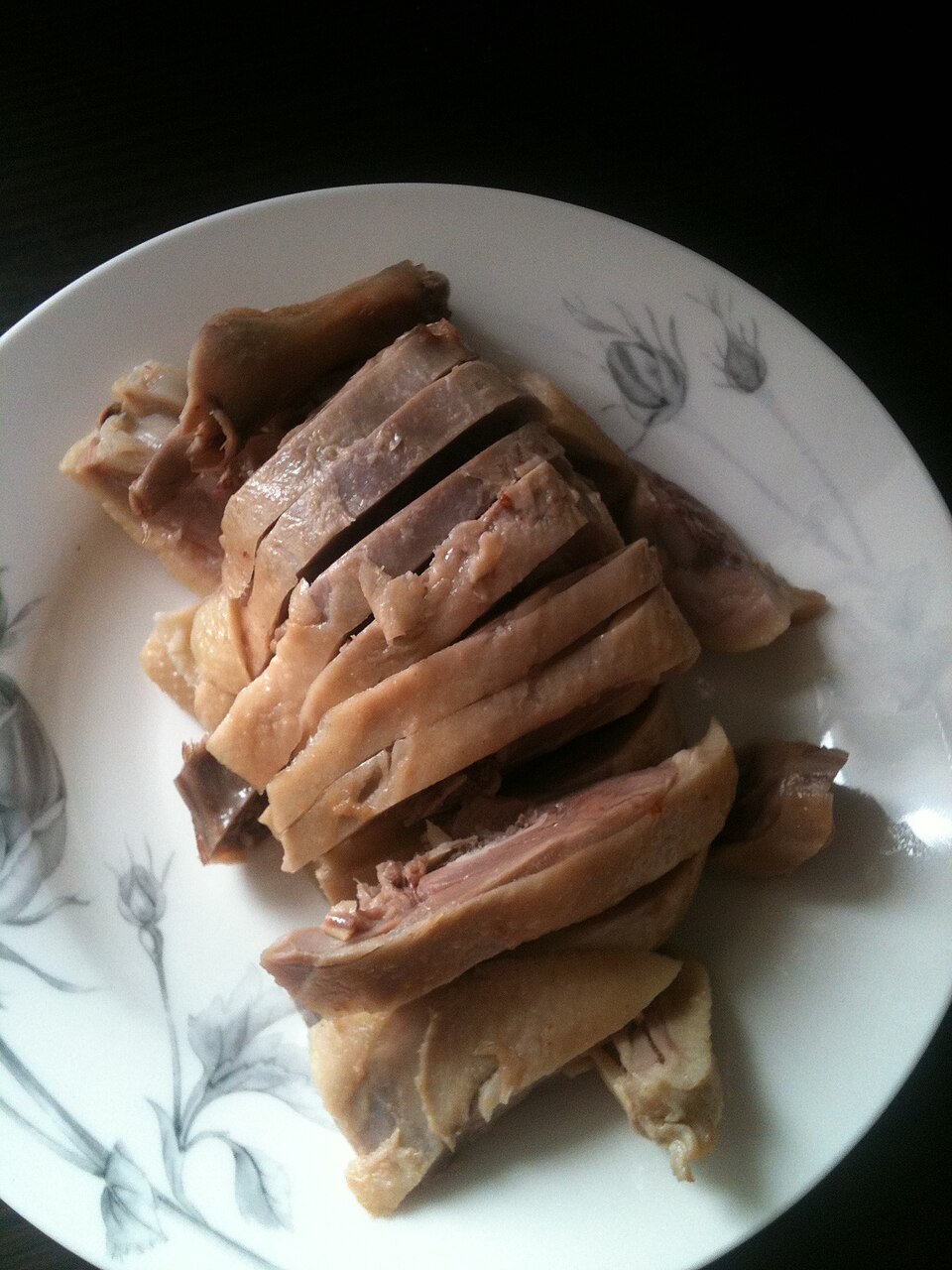
Nanjing's cold brined duck: pale, fragrant, nothing like roast duck.
Buy by the half from shops with a dusk queue.

Glass noodles in duck broth with tofu puffs and curd; better than it reads.
The everyman lunch; add chili oil to taste.

Large soup-filled dumplings, sipped through a straw before you eat the wrapper.
The crab-and-pork (xiehuang) version is the local pride; sip first, slowly.
Forget roast duck; here it's salted duck (yanshuiya), sold by the half from shops with queues at dusk, and duck blood vermicelli soup, which tastes far better than it reads. Both run cheap; the famous chains are fine but the neighborhood shops are better.
Nanjing's soup buns are bigger and soupier than Shanghai's. The straw is not a gimmick; drink first, then eat, or wear it. Confucius Temple area sells the photogenic version; the better ones hide in the lanes east of it.
The honest layer
The part a tourism board will never print.
Nanjing's catch is that its best sights cost nothing yet still gate you at a real-name reservation. Sun Yat-sen Mausoleum and the Massacre Memorial are both free but require you to book in advance with ID before you show up. The Memorial is strict about it: tickets drop daily at 08:00, you book one to seven days ahead through its official WeChat account, and accepted documents explicitly include a passport and the Foreigner's Permanent Residence card, so foreigners are genuinely covered here. The Mausoleum's online system is clunkier for outsiders, and the standard workaround is to carry your passport and get in at the gate when the booking site won't cooperate. The Presidential Palace plays by its own rules: it is paid (35 RMB), it bans every third-party reseller, and the only official channel is the 'Nanjing Zongtongfu' WeChat mini-program, with entry by scanning your booked ID or passport at the turnstile. The practical lesson for any foreign visitor: treat 'free' as 'free but reserved', sort the bookings the day before, and keep your passport on you, because none of these places will let you in without the ID the reservation was made under.
The Massacre Memorial is the most affecting museum in China and it will flatten your afternoon. Don't schedule anything cheerful right after, dress plainly, and keep the phone down. If you only have energy for one major sight, locals would tell you this is the one that matters.
The mausoleum, the Ming tomb and the observatory all sit on one wooded mountain with shuttle buses between them. Buy the through ticket once instead of piecemeal, start early, and you've covered most of historic Nanjing without touching downtown traffic.
The Fuzimiao quarter is more lantern-lit shopping street than historic site, and the riverside snack stalls there run well above normal city prices. Come for the evening atmosphere if you like, but eat your real meal elsewhere and do not expect a quiet temple.
Straight answers
Do Nanjing's main sights need booking?
The two big free ones (Sun Yat-sen Mausoleum and the Massacre Memorial) use real-name reservations and close on Mondays, so book those with your passport ahead. The Memorial releases tickets daily at 08:00 and lets you book one to seven days out, with passports and the Foreigner's Permanent Residence card accepted. Nanjing Museum is also free-but-reserved. Most paid sights, including the City Wall, sell at the gate.
How do foreigners book the Presidential Palace?
Only through the official 'Nanjing Zongtongfu' WeChat mini-program; no third-party reseller is authorized. It's paid (35 RMB), and you enter by scanning your booked ID or passport at the gate. Completing the online purchase usually needs a Chinese WeChat or phone number, so set that up in advance or ask your hotel for help.
How many days does Nanjing need?
Two full days: one for Purple Mountain, one for the memorial, the city wall and the Confucius Temple quarter at night. It pairs naturally with Suzhou or Shanghai by high-speed rail.
Is Nanjing doable without Chinese?
Yes. Metro and major sights have English; reservations are the main friction point, and hotel front desks will usually make them for you if you ask the day before.